 Glossary
Glossary
Glossary
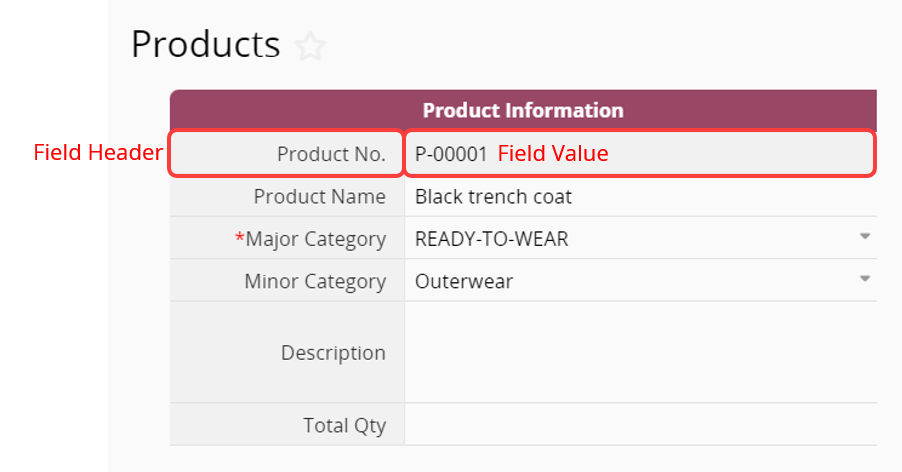
A field is the basic unit for storing data in Ragic. It consists of two parts: the field header and the field value. The field header indicates the name of the field, while the field value refers to the content saved in the field, such as text or numbers. For example, in a product record, there may be a field used to store the product number. In this case, “Product No.” is the field header, and “P-00001” is the field value. An independent field (regular field) can only store a single value. This example sheet contains six fields:
Another type of field is the subtable field, which is used to store one-to-many data within a single record on a form page. In other words, a single subtable field can contain multiple values under its header. The headers of subtable fields are arranged horizontally. For example, the four fields shown below are all subtable fields:

For more details on these two types of fields, please refer to this article.
The concept of a field isn’t unique to Ragic. It’s a widely used principle in data management. Whether you’re working with paper forms, Excel, Google Sheets, or other tools, fields are commonly used to organize information. For example, when managing sales orders, there’s typically a field for recording the customer’s name, regardless of the format.
So when you’re migrating your data into Ragic, you can generally follow the same field structure you’ve been using. While the way data is presented may vary, the core concept stays the same.